
The Seasonal Flood Pulse: How the Amazon and Mekong Sustain Global Biodiversity
Exploring the flood pulse concept in fluvial ecology, where the predictable annual rise and fall of river water drives evolutionary adaptations.
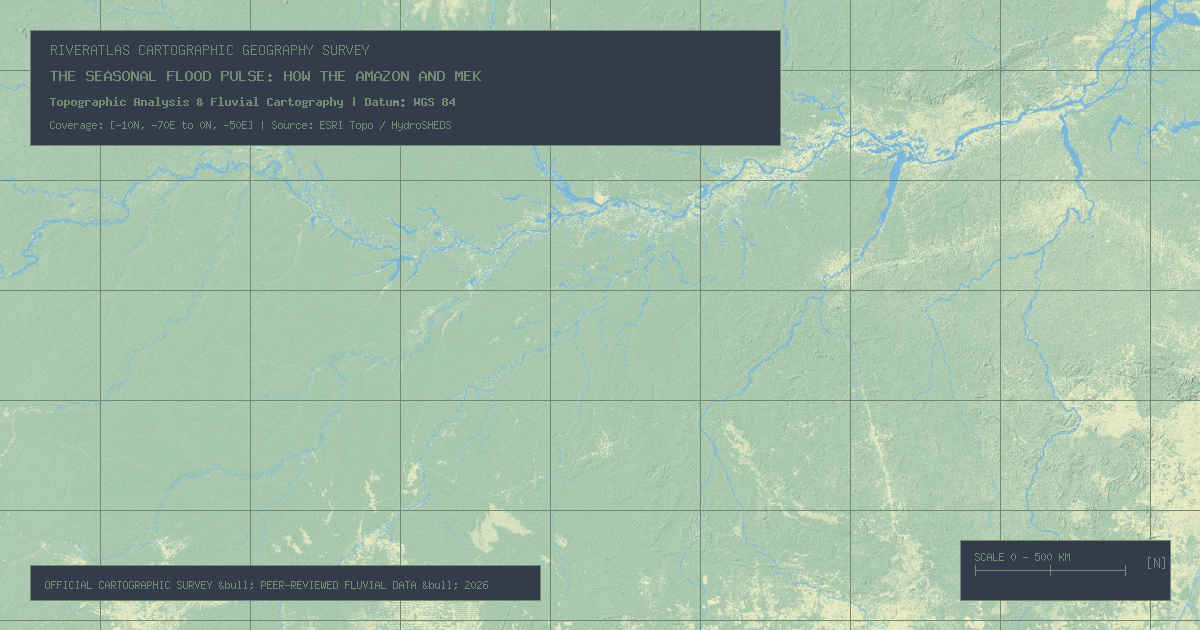
In conventional urban thinking, river flooding is viewed as a destructive natural catastrophe. In tropical freshwater ecology, however, the **flood pulse** is the primary driver of ecosystem productivity, species adaptation, and nutrient cycling.
First formalized by ecologist Wolfgang Junk in 1989, the flood pulse concept demonstrates that the aquatic-terrestrial transition zone (ATTZ) undergoes periodic inundation that fuels rapid primary production.
### The Amazon Várzea and Igapó
In the Amazon basin, river levels fluctuate between 8 and 15 meters annually between the dry and wet seasons. Millions of square kilometers of rainforest become submerged for several months. Fish like the tambaqui (Colossoma macropomum) have evolved specialized molariform teeth allowing them to feed on seeds and fruits dropping directly into the water from flooded canopy trees.
### The Mekong\'s Reversing River
In Southeast Asia, the Mekong River experiences a remarkable hydrological phenomenon during the monsoon season. The volume of water descending the Mekong is so immense that it forces the Tonle Sap River to reverse its flow backward into Cambodia\'s Great Lake, expanding the lake\'s surface area fivefold.
Founder & Platform Administrator • The RiverAtlas Geographic Publishing Unit
Ammy Saini is the founder, chief administrator, and lead curator of The RiverAtlas (theriveratlas.info), directing global river hydrography, cartographic mapping datasets, and geographic publication integrity.
Related Geographical Research
The Ganges-Brahmaputra Delta: Dynamics of the World's Largest Estuary
How Himalayan tectonic erosion feeds a colossal delta of 105,000 square kilometers, nurturing the Sundarbans mangrove wilderness and the Bengal submarine fan.
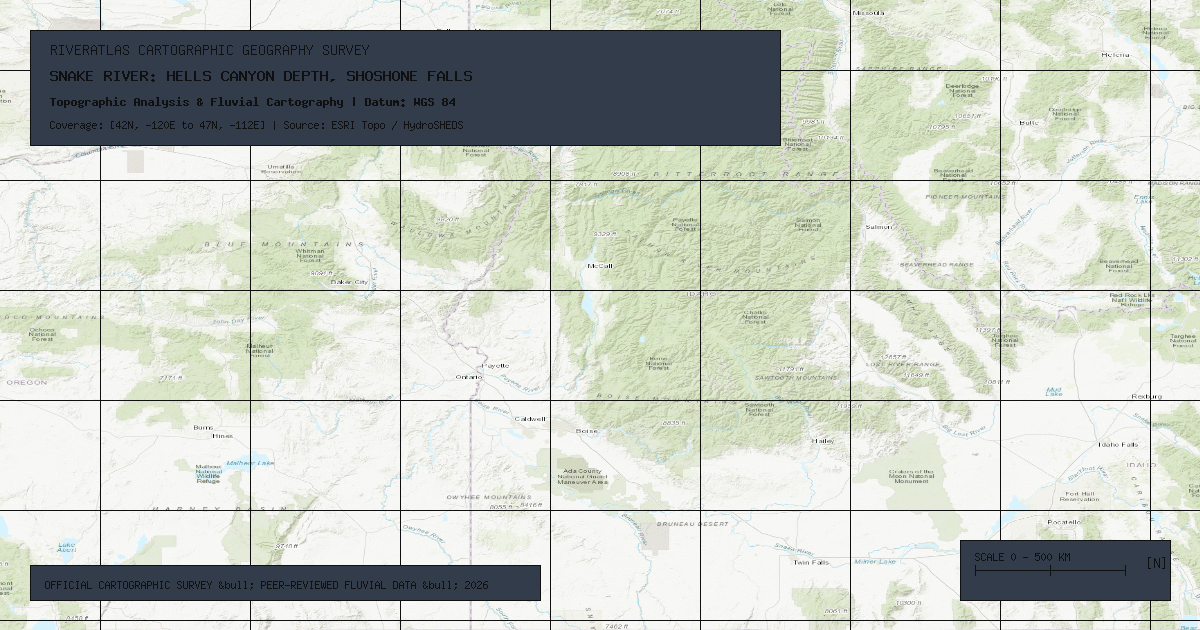
Snake River: Hells Canyon Depth, Shoshone Falls & Lower Snake Dam Ecology
America's deepest river gorge cuts 7,993 feet into the basalt mountains of Oregon and Idaho along the 1,078-mile Snake River, center of the major Pacific salmon restoration controversy.
Colorado River Delta Desiccation: Tidal Restoration & Minute 323 US-Mexico Treaty
Once a two-million-acre lush riparian wilderness, the Colorado River Delta was completely desiccated by upstream dams until historic pulsed-flow restoration treaties.